Olympic National Park
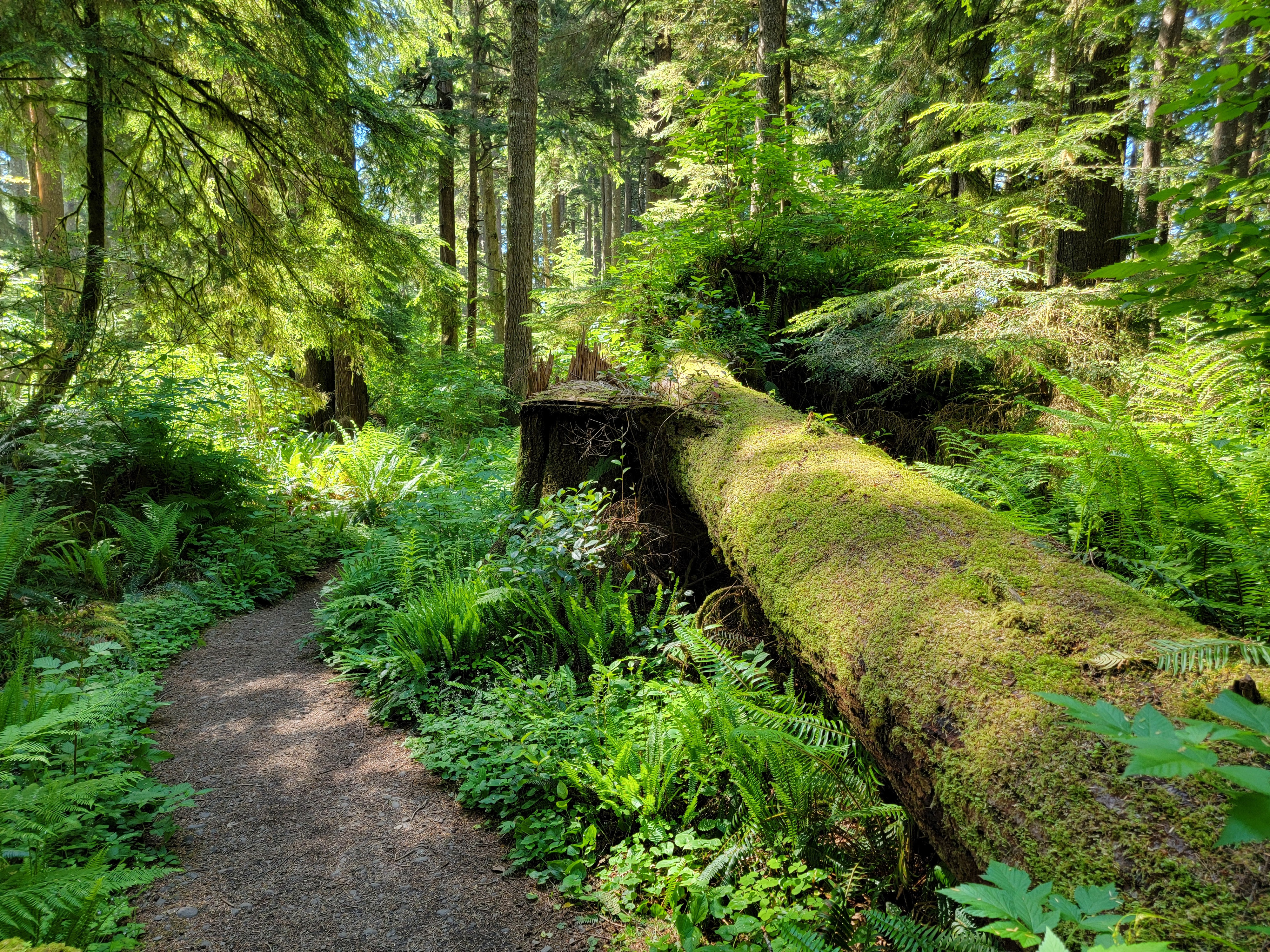 Heavy rainforest on the trail to Third Beach
I wanted to do a hiking trip to Madeira. (I know. You are wondering what that has to do with Olympic National Park. Bear with me.) It's an island in the Atlantic that is part of Portugal. I read about some of the hikes there and saw some pictures that looked amazing. When I talked to Sandy about it, she started to research Portugal as a destination, and she got excited about the idea too. We put together a trip with a week on the continent in Porto, exploring on our own, and a week in Madeira on an organized hiking trip. We were set to leave on the first of June.
Well, it didn't work out that way. The afternoon before we were supposed to leave, Sandy did not feel well. It got pretty bad and before long I took her to the ER. The good news is that by that evening she was feeling better and was able to come home. The bad news was that we did not feel comfortable leaving on an intercontinental flight early the next morning for two weeks of hiking. We hated to do it but we canceled the trip at the last minute. It's still on our list so maybe next year.
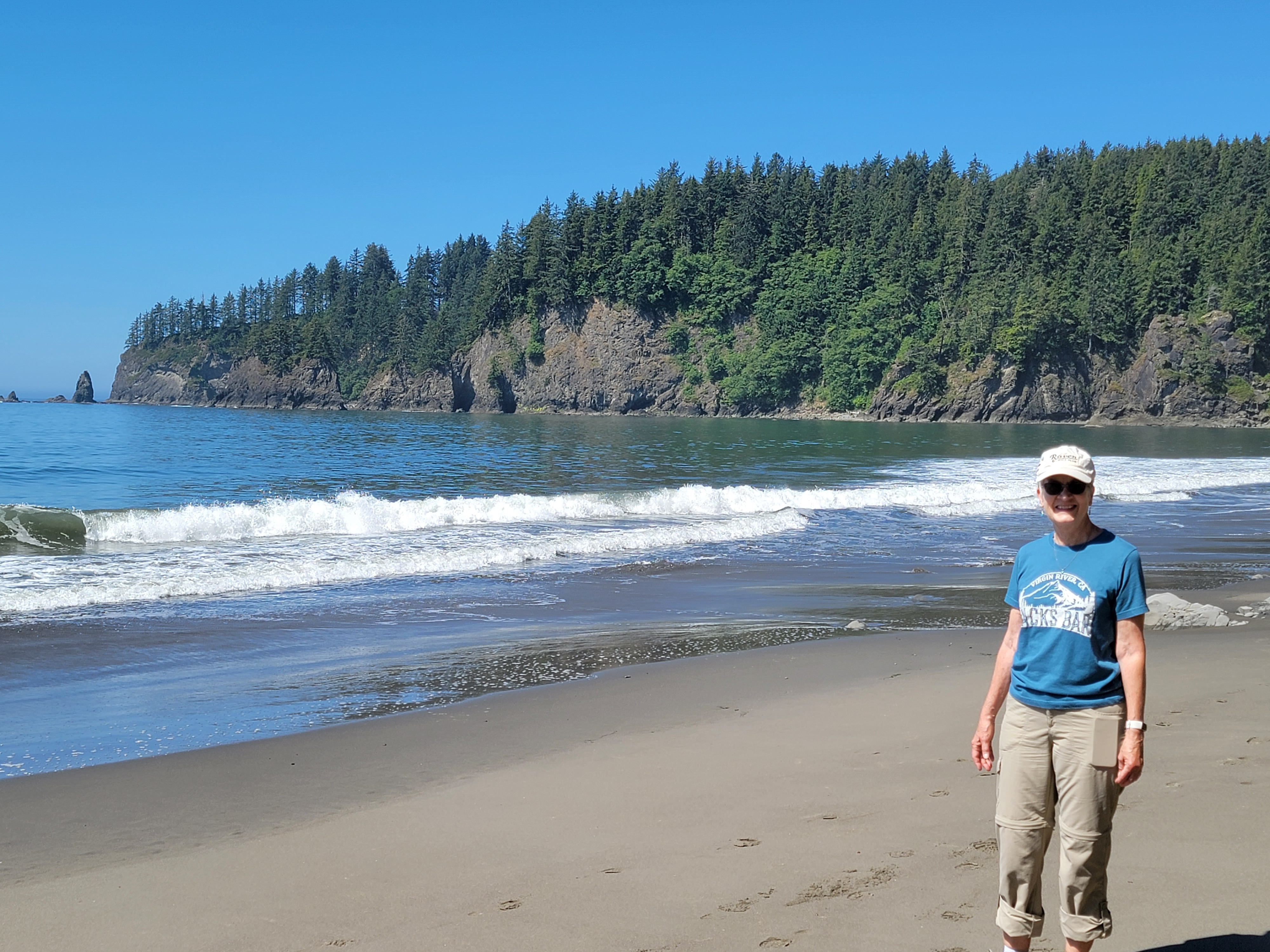 Sandy on Third Beach
After a couple of days Sandy was pretty much over whatever had knocked her down. We started to think about alternative trips. After all, we had a dogsitter lined up for two and a half weeks. We decided to do something closer to home, so we could bail out if she wasn't feeling well. Last year we had done a trip to the Olympic Peninsula and really enjoyed it. Although we had seen and done a lot on that trip, we also identified a lot of things for a return trip someday. Well, someday was now. We checked with the dogsitter. She was still good to go. We made hotel arrangements, and we were off.
We spent a day driving to Forks, the only sizeable town in the west-central portion of the Olympic Peninsula. It claims to be the rainiest town in the US, although a few other towns might challenge that. It does get a lot of rain, usually 120 inches per year. It averages 212 days every year with measurable precipitation. Whether it's the rainiest or not, that seems like a lot of rain to me, since I live in Boise where we only get eleven inches of rain per year.
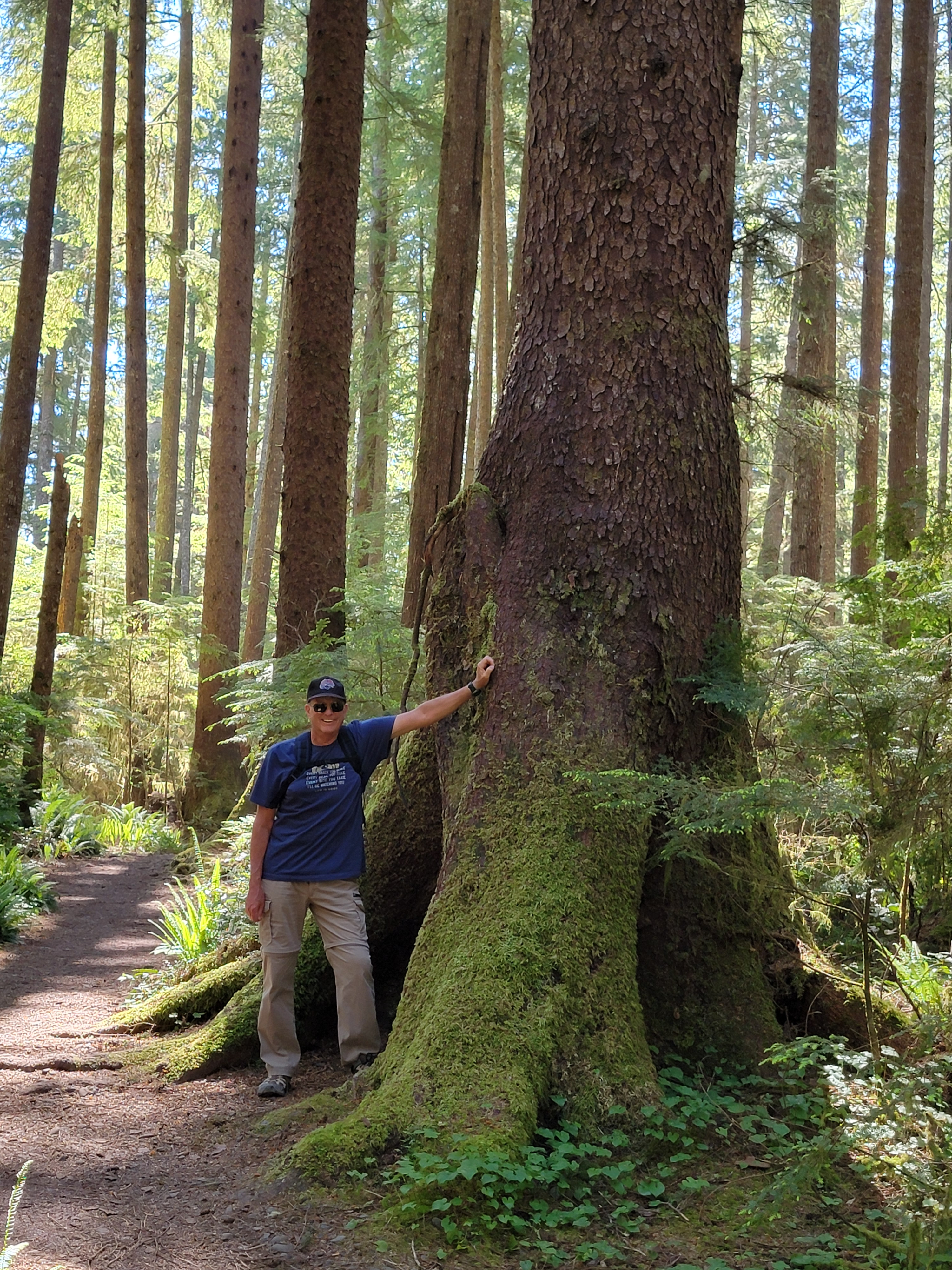 Tall trees on the Third Beach trail
The towns other claim to fame is also related to its weather. Forks was the setting for the Twilight Saga, both the novels and the movies. A town where the sun almost never shines would seem like a good place for vampires to want to hang out.
They make a big deal of the Twilight connection in Forks. There are life size cutouts of the characters in the town Visitor Center. The Forever Twilight in Forks Festival draws lots of fans of the series every year. There are posters of vampires and signs about vampires all over town and the surrounding area. And of course there are lots of Twilight and vampire tshirts and other souvenirs available. Even though I'm a big collector of tshirts, I wasn't tempted to buy a Twilight-themed one. I've never read the books. They're targeted mainly at teenage girls and young women. I think I'll stick to tshirts from national parks and tropical islands if you don't mind.
There aren't a lot of choices for accomodation in Forks. We stayed at the Forks Motel. It was ok. It wasn't bad. It wasn't great. It was relatively inexpensive. We had dinner at The In Place, a diner that was right across the street from where we stayed. Our motel was also right across from Mocha Motion, a coffee shack where Sandy could get her caffeine fixes while we were in town. So the motel did get points for location. Not too many though. It's not like anyplace in Forks is far away from anyplace else.
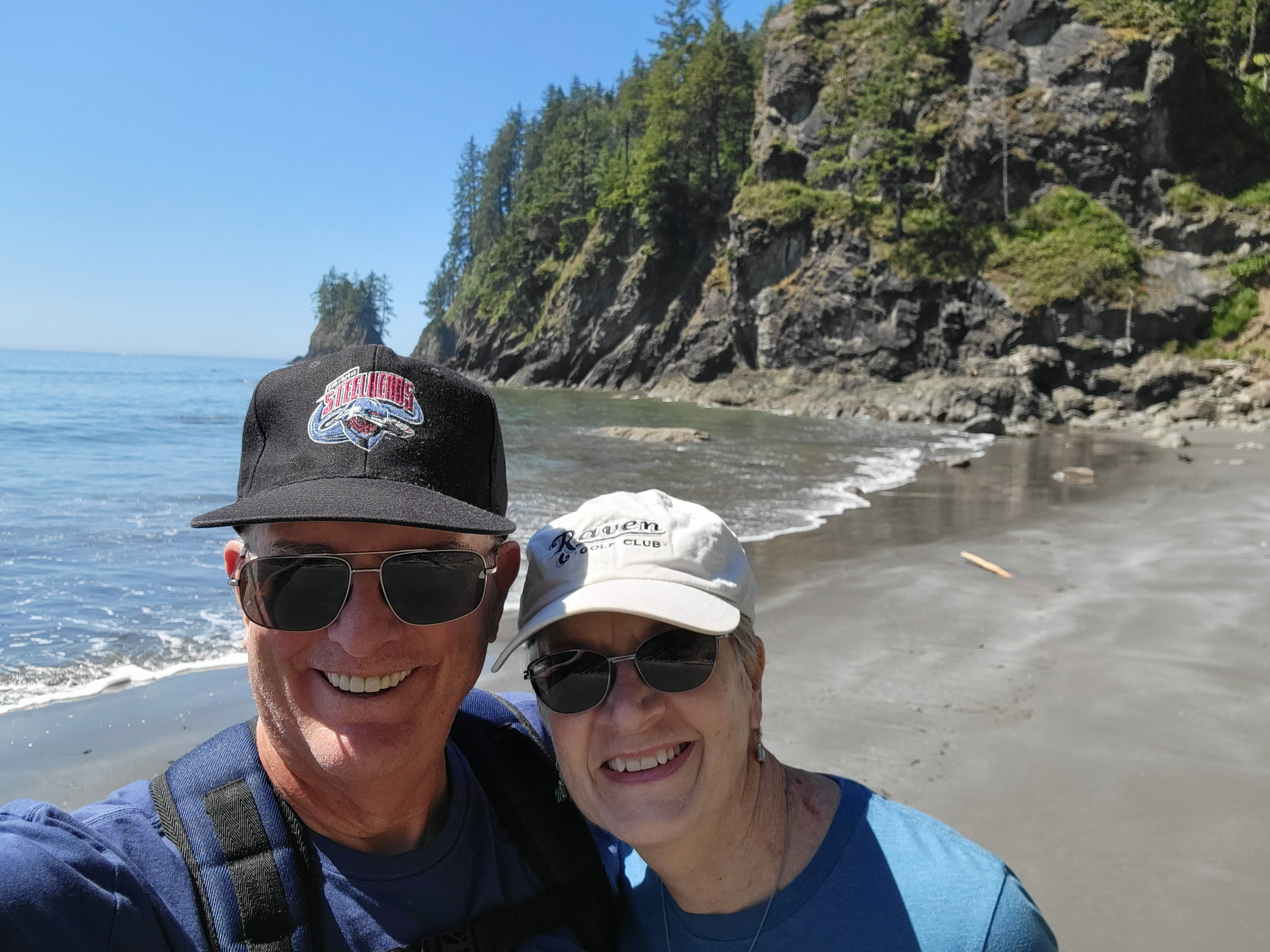 Selfie on Third Beach
Olympic National Park covers a large area in the center of the peninsula. It protects the heart of the Olympic mountains, preserving much of them as wilderness. I've done several good hikes on the east side: Upper Lena Lake, Mt. Ellinor, Grand Valley and Mt. Townsend. On the north, from Hurricane Ridge road, I've done Klahane Ridge several times, once with Sandy. I've even climbed Mt. Angeles, a fun scramble and a magnificent viewpoint. The hiking is great but can be challenging. The Olympics get a lot of rain. A lot of rain. Bugs, especially black flies, can be bad in summer, which is usually the only time when you have a reasonable chance of getting good weather. And even though the mountains are not that high, the river valleys where you start are close to sea level, so there is a lot of elevation gain. Because of the heavy rains, trails are often overgrown and bushwhacking may be neccesary. Some routes even require scrambling.
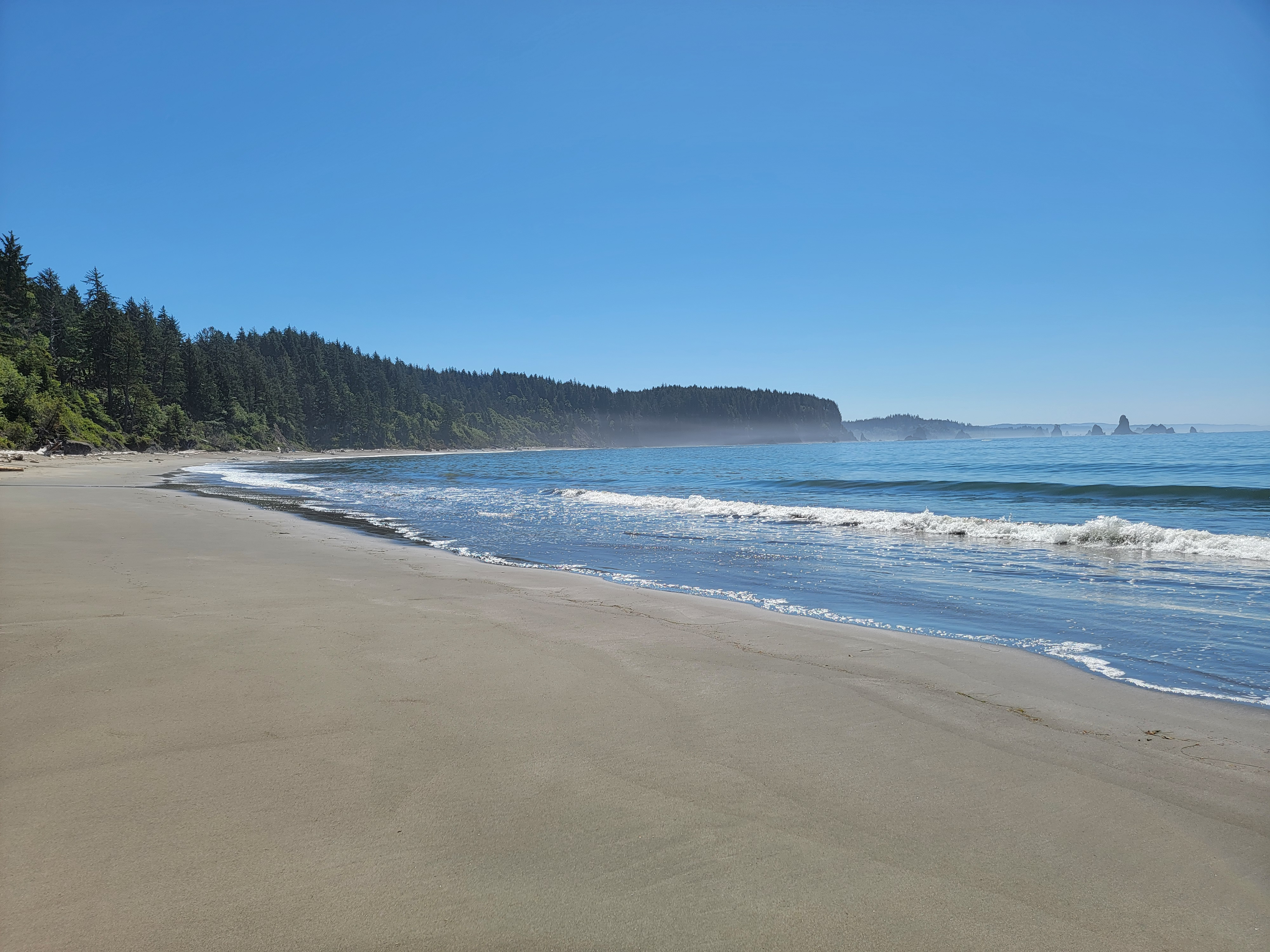 Looking south along the length of Third Beach
But there is another section of Olympic National Park, a narrow strip about a mile wide and seventy five miles long, that runs along the ocean on the western edge of the peninsula. It's about twenty miles from the main part of the park. It preserves some of the only remaining wilderness coastline in the continental United States. There is a long section with only one point where a road reaches the coast. On either side are long stretches where for many miles the only access is on foot.
That wilderness coastline is what we wanted to explore on this trip. Just north of Forks, Washington Highway 110 starts at US101 and goes west twenty miles to the small unincorporated town of La Push. It's on the Quillayute Indian Reservation and is located at the mouth of the Quillayute River. It has one small lodge, one restaurant, one general store, a small marina and a US Coast Guard station. From La Push, going south it is over twenty miles to Oil City, a tiny town which is the next road access point. The hike between the two is a tough multiday backpack, sometimes on the beach, sometimes on primitive trails over or around headlands. Stream crossings pose significant challenges on the route and tides require careful planning.
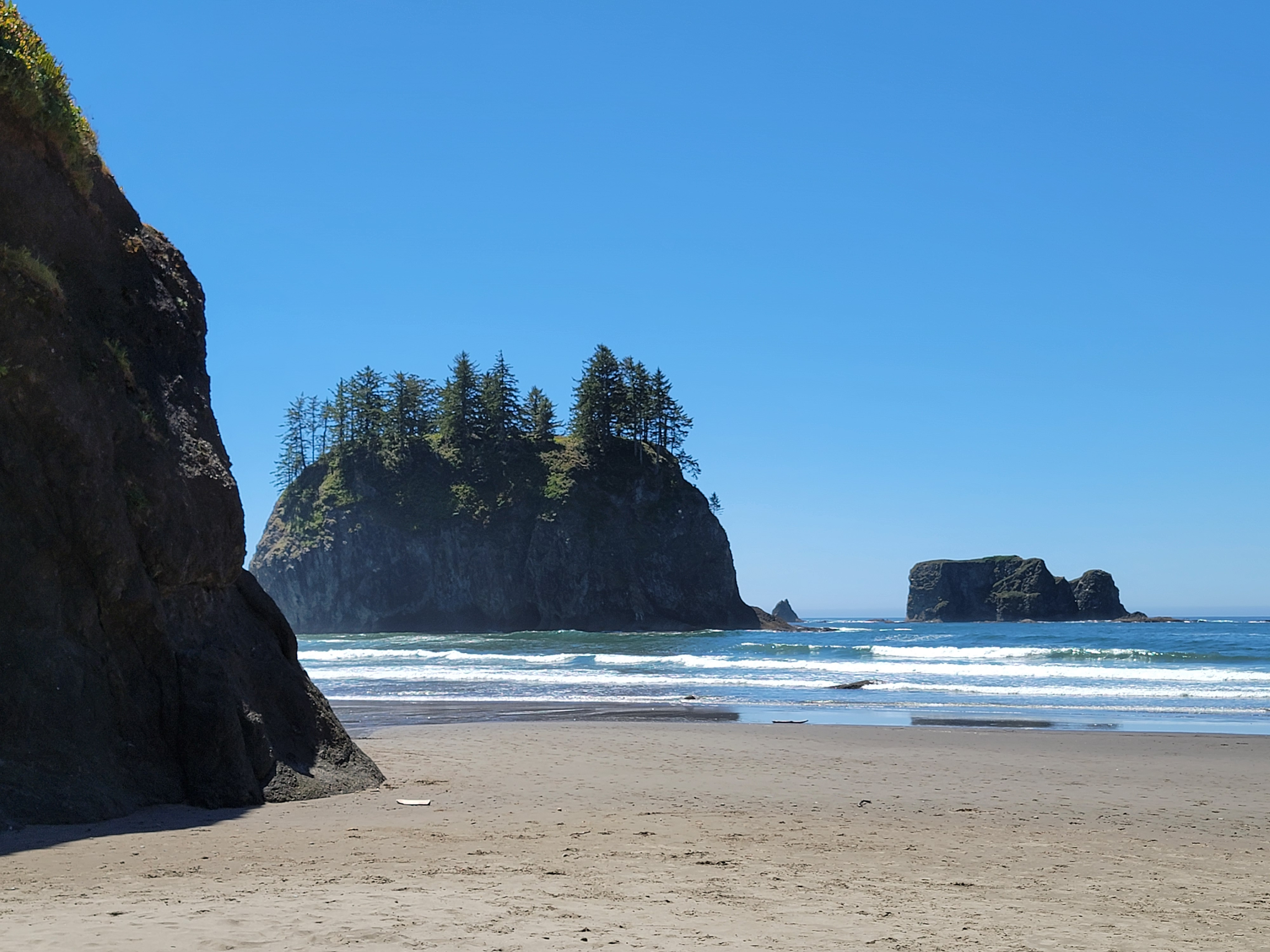 Sea stacks along Second Beach
About half way between Forks and La Push on WA110, a road splits off and follows the other side of the Quillayute River to a parking area at Rialto Beach, just across the river from La Push. Going north from there is another difficult route that follows the coast for about twenty miles before turning inland two miles to Ozette, where there is a ranger station and campground at the end of the road.
Both of those hikes are a little more than I would want to tackle at this stage of my hiking career. But I think just the idea that those long stretches of wild coast exist is cool. Our plan today was to sample it. There are three beaches that can be reached on moderate hikes from trailheads along WA110. They are named, rather unimaginitively, First Beach, Second Beach and Third Beach. We could also drive to Rialto Beach and hike along it. Our plan was for Third Beach to be our first beach while our second beach would, in fact, be Second Beach. Then if we had time we would do a third beach but it wouldn't be Third Beach because we had done it first. Clear? Good.
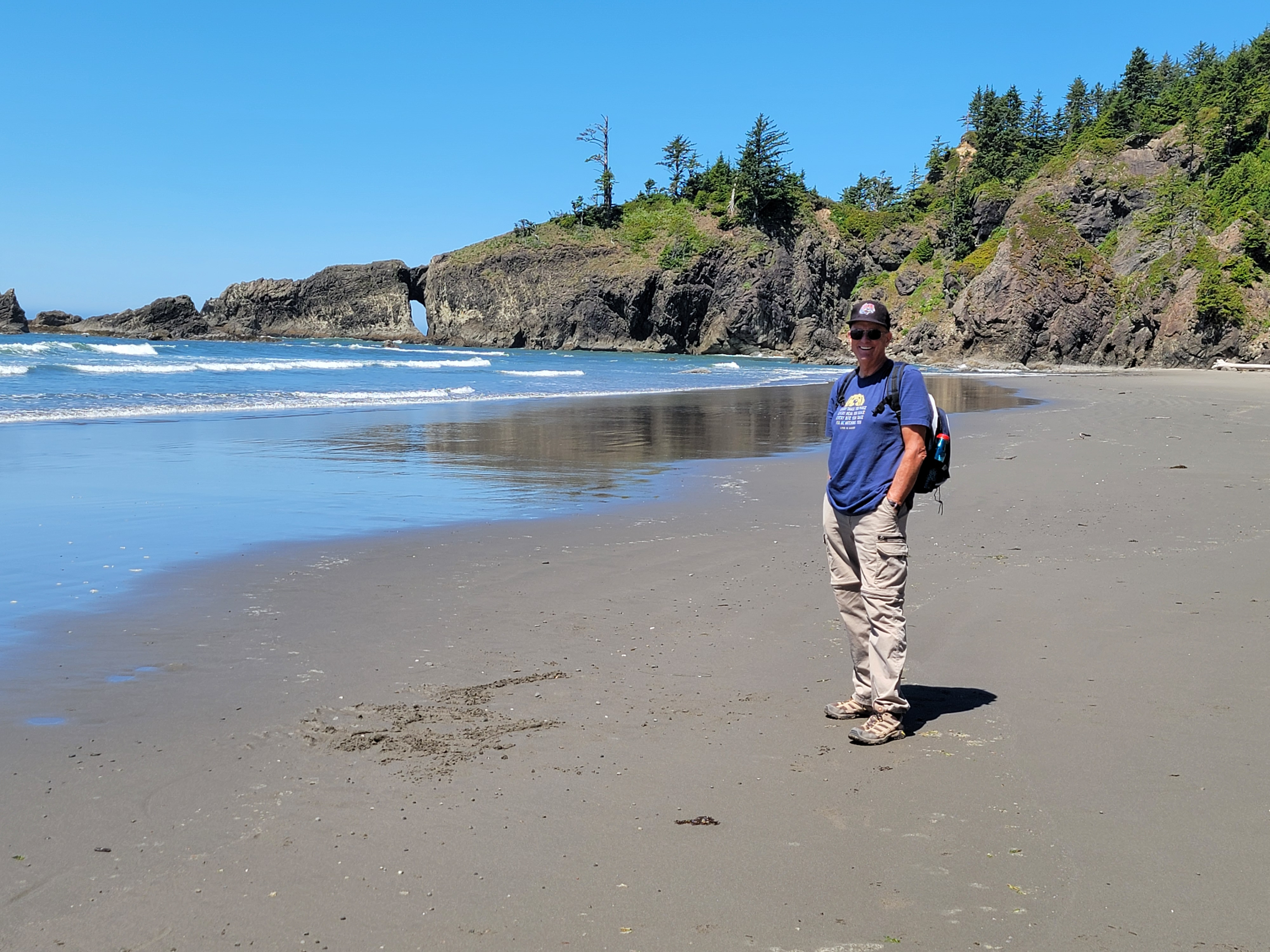 The Mighty Hiker on Second Beach
There was a large parking area at the trailhead for Third Beach, with quite a few cars there. Ominous signs warned against leaving anything valuable in your car because of frequent breakins. I think that reall sucks. You should feel safe and at peace in the wilderness, not be on your guard like you're in a bad neighborhood in some big city.
The hike was easy, just under two miles with a 377 foot descent to reach Third Beach. The trail went through an impressive rainforest, which you would expect this close to the ocean. The trees had plants growing all over them while the plants had moss growing all over them. Everything was covered in green: tree trunks, rocks, even the ground. It was quite a contrast to the hiking I am used to in Idaho, which is much drier. It was very pretty and also very quiet. There were no hard surfaces anywhere. Everything was soft and absorbed any sound. It reminded me of being in one of the great cathedrals in Europe. I was surrounded by trees disappearing into the sky, and it was so quiet the only sound was my own breathing. When I spoke I felt like I should be whispering.
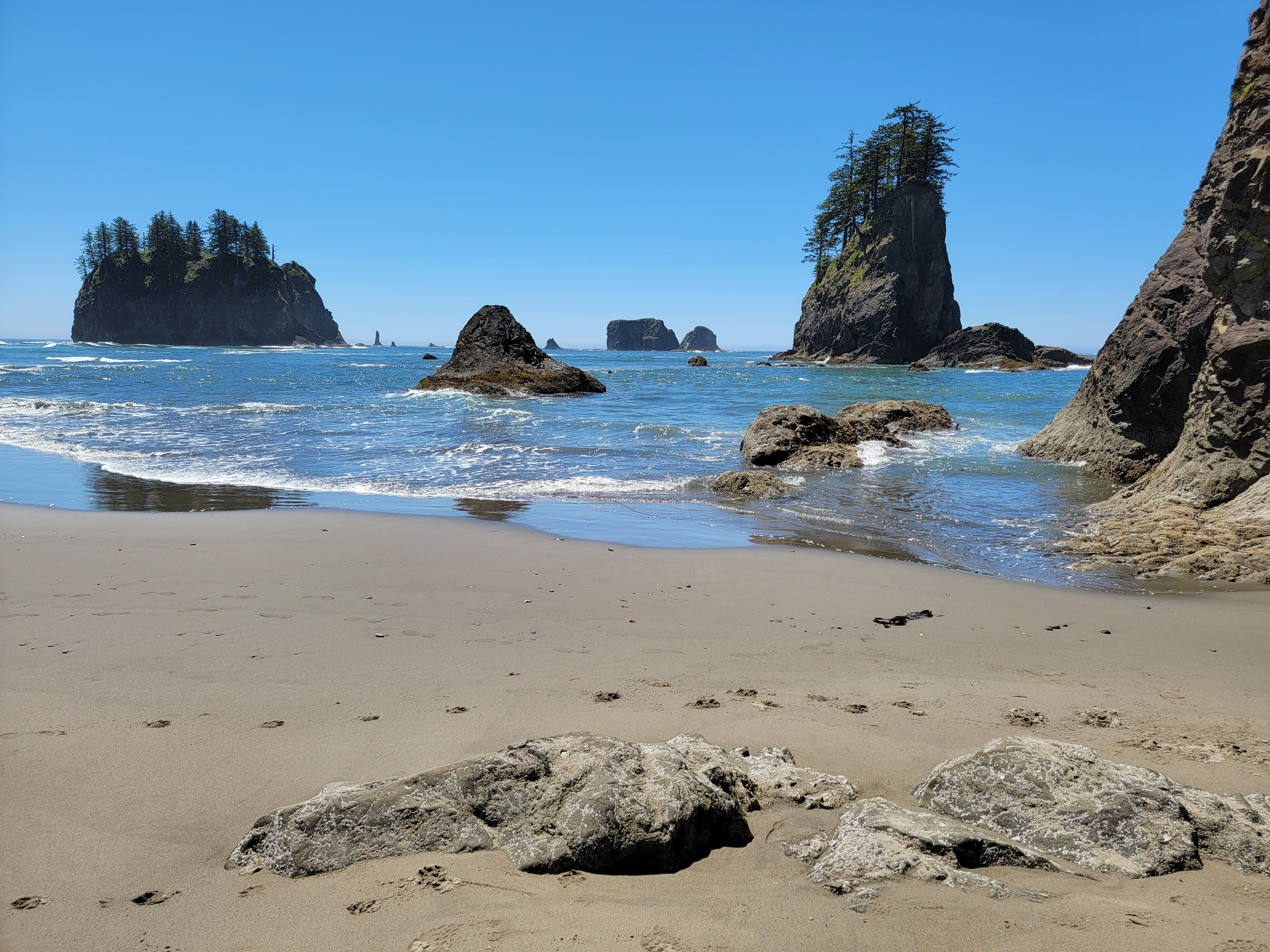 Sea stacks along Second Beach
Third Beach was beautiful. It extended a long way to the south, where many sea stacks were visible some distance away. There were people here, but the beach was long and they were widely scattered. It didn't feel crowded. There were half a dozen tents right where the trail emptied onto the beach. I'm not sure if they had just done the short hike from the trailhead or if they were through hiking from La Push and this was their first overnight stop. While I'm sure camping on the beach would be quite an experience, I don't know if I would want my gear full of sand and salt spray. It seems like sleeping would be cold and damp too. We didn't have that problem because we were here on a warm, bright, sunny morning. We turned to the north and hiked along the beach for about a quarter of a mile to where it ended at a steep headland lined with cliffs. That was as far as we could go in that direction so we retraced our steps to the trail and climbed back up to the car. The hike took us a total of two hours.
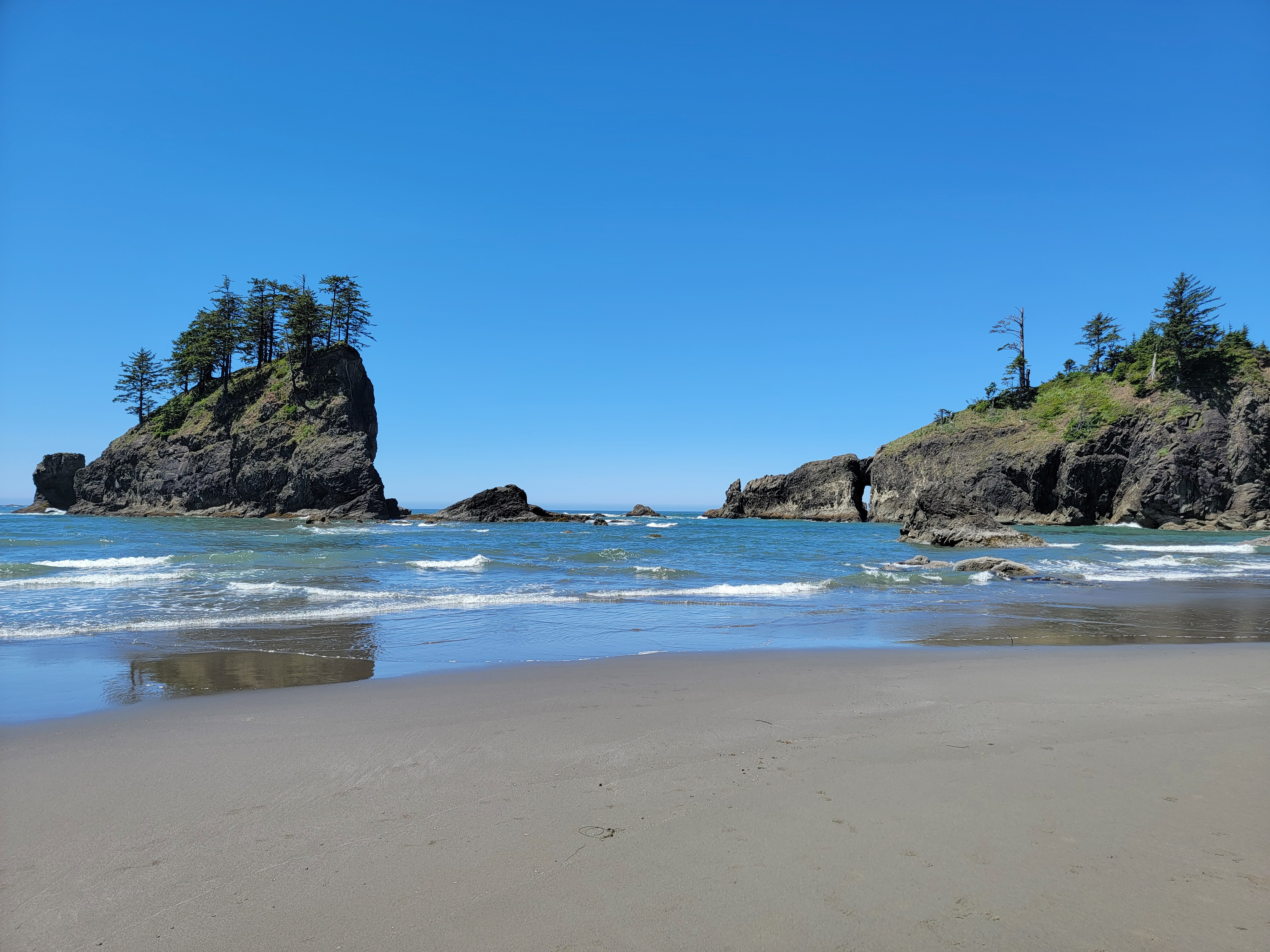 Second Beach
Next was Second Beach. It was a shorter hike, only three quarters of a mile with a 300 foot descent. It was another beautiful beach, I think even prettier than Third Beach. There were several large sea stacks near the shore, with steep cliffs rising out of the ocean on all sides, and inaccessible miniature forests growing on top. Just to the south one of the sea stacks was very close. Because it was low tide it was possible to walk right out to it. Several people were exploring the tide pools around its base.
Instead of joining them, we turned and went the other direction and walked about a quarter of a mile north to the end of the beach. Eventually we were blocked by a narrow, rocky ridge that stretched a long way out into the ocean. There was an interesting hole in the ridge, a natural arch, about half way along it that allowed you to see clear through. This time it was an hour total time when we got back to our car.
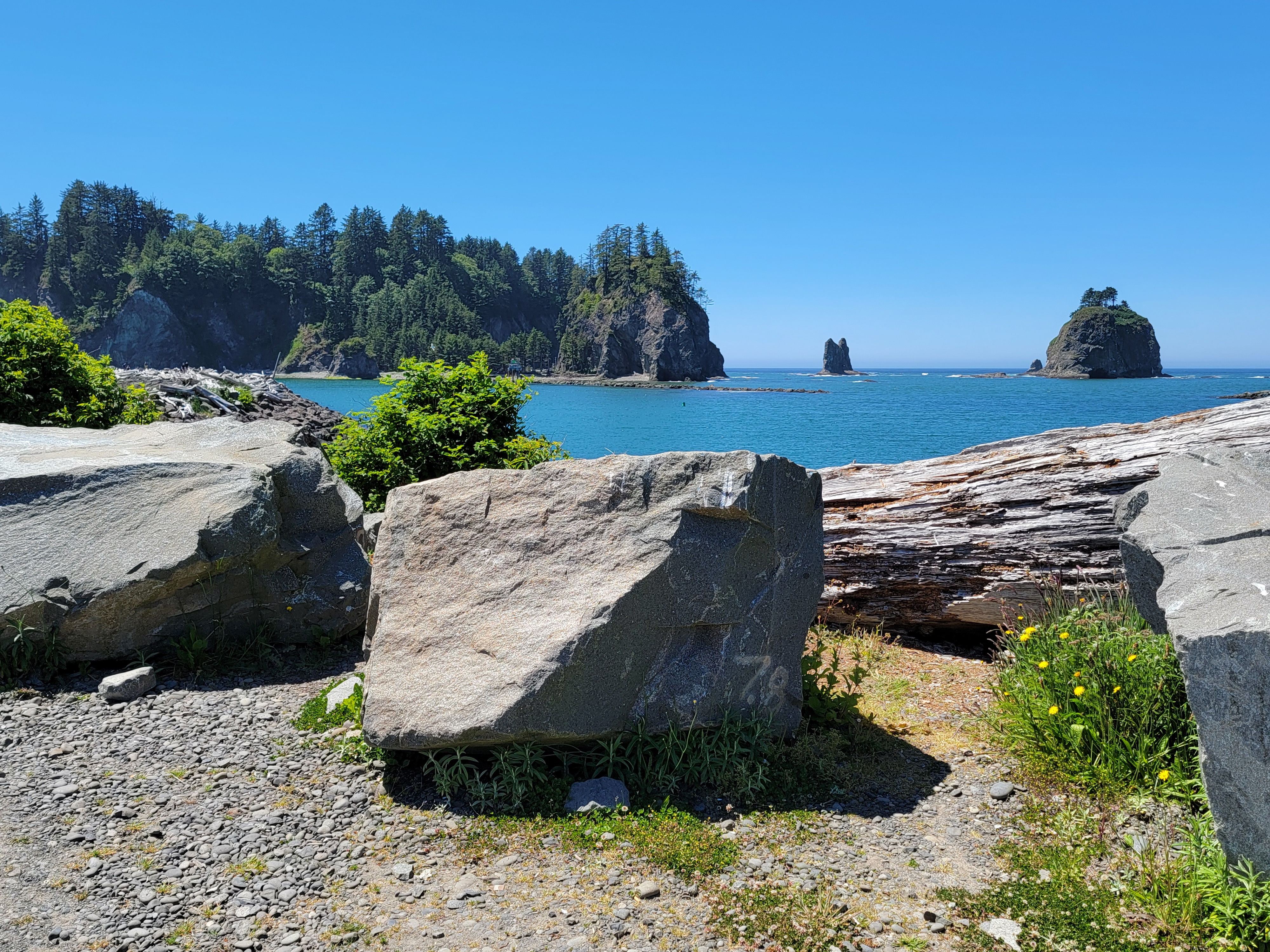 View of James Island from La Push
With all that fresh air and exercise we had both worked up quite an appetite. We drove back to Forks and had linner at Blakeslee's Bar & Grill. We ended up chatting with the young guy sitting at the table next to ours. He was from England and was spending the summer touring around the US. Traveling by train, he had visited several cities across the country. Then he bought a bike and started riding it around the western US. He'd already pedaled his way to quite a few places and covered a lot of distance. He was in a bit of a bind now because he had a flat tire. Unfortunately for him, the nearest bike shop was probably over fifty miles away. That's a bit far to walk your bike. We thought his best bet in such a small town was a gas station, which probably did some service work on cars and might do tire repair. With a patched tire he might be able to ride far enough to reach Port Angeles, his best bet for finding a bike shop. Such are the hazards of traveling in remote areas.
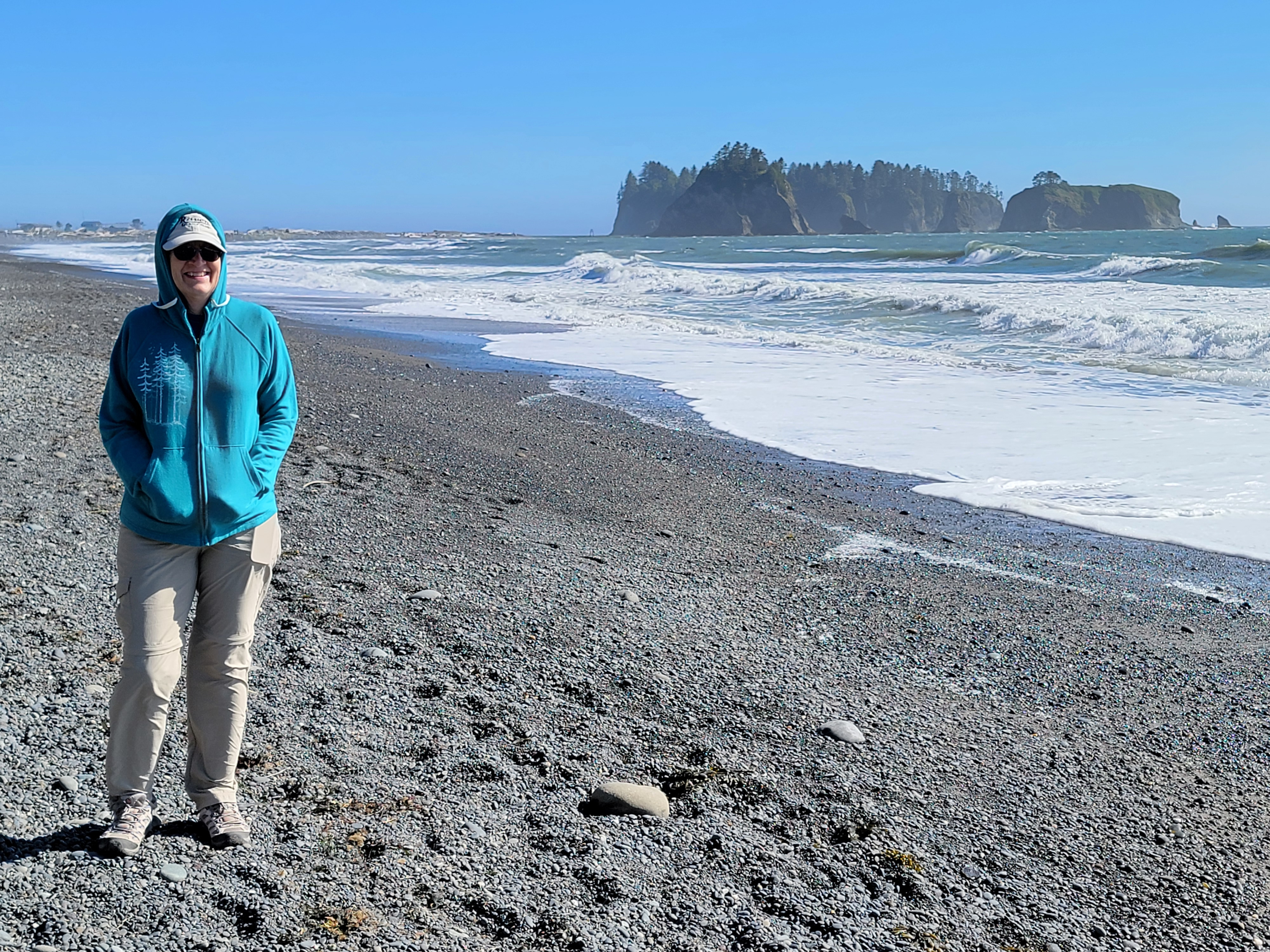 The wind is a bit chilly at Rialto Beach
After dinner we still had some energy left, which was pretty good for a couple of old folks. Since it was mid June it didn't get dark until late, so we drove back to the ocean. This time we turned off on the road to Rialto Beach. Even though it was 5:30 when we got there, the large parking lot was filled with cars. There were a lot of people there, since you could drive right to the beach, but it was so large that it didn't seem crowded. Since it was late in the day a strong wind was blowing off the ocean. Earlier in the day we had hiked in tshirts. Now we needed our jackets and it was still a bit chilly.
We walked along the beach for about half a mile and the crowd thinned out quickly. A mile further is another natural arch, a famous landmark known as Hole-in-the-Wall. But to reach it requies checking tide tables because sections of the beach can be completely submerged at times. That was more ambitious than we were feeling so we headed back to the car and called it a day.
Three beaches, all beautiful, all different, and perfect weather, made for a good day. We felt like we had done a good job of exploring the coastline accessible from Forks. Tomorrow we would head south to Lake Quinault.
